Invincible No More: The Reasons The Indian Red-Ball Cricket Standing Has Crumbled
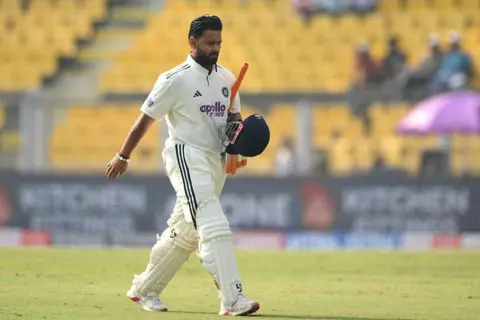
India's surprising 0-2 loss to the Proteas in the just finished red-ball series has plunged the side into crisis.
Earlier this week, the visiting team gave India their heaviest defeat in terms of runs, defying expectations. It was the Proteas' maiden series victory in the subcontinent in a quarter-century and India's second defeat at home in just 12 months after a 12-year unbeaten run.
The positive trajectory gained during the last several months has all but vanished and the futures of several players - including head coach Gautam Gambhir - now hang in the balance.
Initial Hope Fades Quickly
The emerging side's strong showing in the UK this season, under a different skipper, suggested a smooth transition post the almost concurrent exits of stalwarts R Ashwin, Rohit Sharma, and Virat Kohli.
A facile 2-0 triumph over the Windies at the commencement of the domestic season boosted that belief, until the Proteas arrived to deliver a fell blow.
India were somewhat unlucky that leader Gill suffered an injury very early in the opening Test and took no further part in the series. However, that neither explains nor absolves the side of the highly disappointing showing in both Tests against the opposition.
Several established players were damaged, and several players hoping for long red-ball careers were exposed as not yet good enough - in ability or temperament - for the Test cricket.
A Troubling Pattern
This represented the second series sweep on home soil suffered by India in just a year. In 2024, underestimated the Kiwis had pulled off a surprising 3-0 victory which essentially denied India a berth in the World Test Championship (WTC) final.
The recent defeat to South Africa could damage India's prospects of reaching the decider of this season too.
From number three in the WTC table prior to the contest, India have fallen to number five. Although nine more Tests are yet to be played, half of these are against the Aussies. Ordinarily, competing on home turf would be a significant benefit - even against the powerful Australians. However the disasters against the Kiwis and the Proteas offer no room for such assurance.
Causes of the Fall
The national team's vulnerability in red-ball cricket has been significantly highlighted. Nevertheless, why India have fared so badly in Test matches on home soil recently is continues to confuse.
Since the turn of the century, India were regarded as impregnable in Test cricket at home. Under sweltering weather and on pitches that assisted spinners and benefited their players, the hosts dominated all comers. The odd series defeat, like in 2012-13 against England, was viewed as an anomaly.
Currently, the team appear to be beatable at home.
Against the Kiwis in last year and South Africa this year, the home side were beaten at their own game. The tracks they developed to suit their strengths failed miserably, as opponents exploited them better, outplaying India's batsmen and bowlers when it counted the most.
What Happened?
Certain analysts propose that the Indian team is struggling at home because domestic pitches have been modified from turners to fast tracks to train the squad to do well overseas.
Others highlight that the IPL, in which numerous foreign cricketers participate, has removed the unfamiliarity and challenge subcontinental pitches would present to them before.
Although there is a degree of accuracy in these views, it does not clarify why India's performances on home soil have seen such a dramatic drop.

Multiple Failings
Most former players diagnose a multi-faceted challenge, not limited to one or two factors.
Experts and participants have pointed to several failings post India's disappointing performance to the South Africans: not respecting the foe, inadequate readiness, poor choices, arrogance, frequent changes of the starting eleven, and emphasizing limited-overs over Test cricket.
This was obvious in the showings of the team.
Players like Rishabh Pant and Yashasvi Jaiswal, of whom high hopes were held, paid for their lack of application, while Sudarshan, Nitish Kumar Reddy, and Dhruv Jurel - who were aiming to establish their position in the squad - were found wanting in skill and mindset, paying a heavy price for their nonchalant approach.
Only a handful - Jadeja, Jasprit Bumrah, Kuldeep Yadav, Mohammed Siraj and Washington Sundar - did justice to their ability and standing - but not well enough to win matches.
Leadership Under Fire
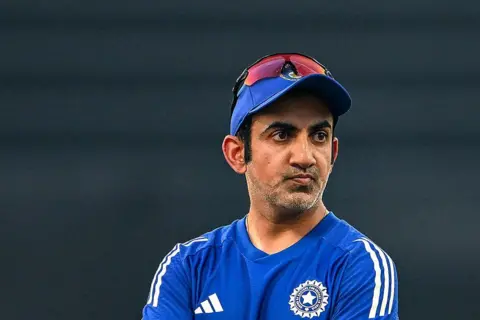
The analysis also included just the players - team selectors and coaching staff were also criticized, driven by disappointed supporters and vocal past stars. Under focus of the criticism was head coach Gautam Gambhir.
In his post-series press
